Marija Bistrica — Croatia's national Marian shrine.
Marija Bistrica is a small town in the Zagorje hills, half an hour north of Zagreb. It's the most-visited Catholic shrine in Croatia, centred on the wooden statue of the Black Madonna (Crna Madona) that has been venerated here since the 16th century. Pope John Paul II visited in 1998 and beatified Cardinal Alojzije Stepinac at the open-air altar that still stands above the basilica. Here's a short visitor guide.
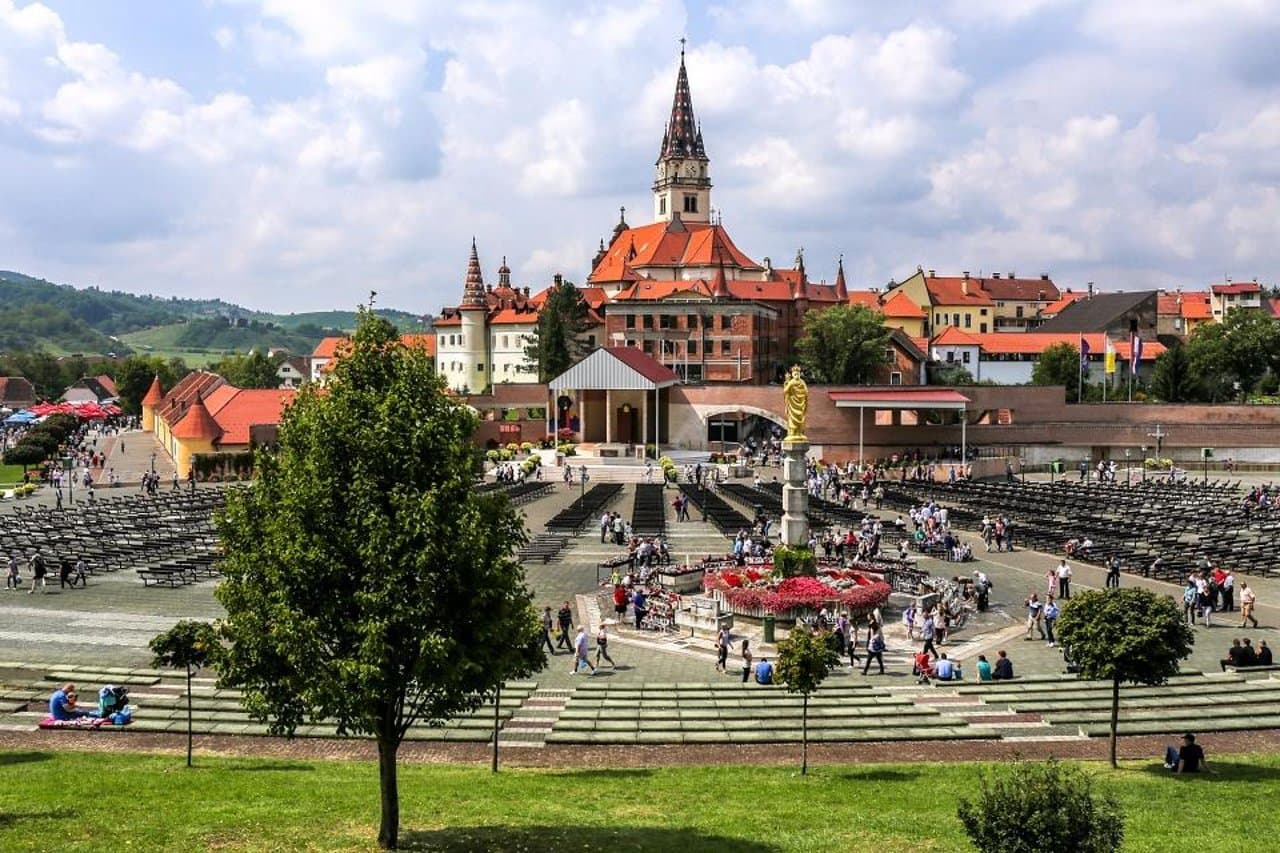
1. The basilica and the Black Madonna
The Basilica of the Assumption of the Blessed Virgin Mary holds the small wooden Black Madonna statue at the centre of the high altar. It's a working pilgrimage church — Mass several times a day, year-round — and you'll always find someone praying, even on a quiet weekday morning. Photography is fine outside Mass times; modest dress required.
2. The open-air altar and the Stations
Walk up the hill behind the basilica. A wide stone staircase climbs through 14 large bronze Stations of the Cross sculpted by Croatian artists, ending at the monumental open-air altar built for Pope John Paul II's 1998 visit. Even outside of pilgrimage days, the altar plaza is one of the more striking ecclesiastical spaces in Croatia and a quiet place to walk.
3. Combine with Zagorje villages
Marija Bistrica fits into the Zagorje touring loop. Within 30-40 minutes you have Veliki Tabor castle, Trakošćan castle, the Krapina Neanderthal Museum, and several small wineries. It's the perfect weekday escape from Zagreb if you're staying in the capital for a few days.
Take a print home from the shrine.
The MomentoSnap booth at Marija Bistrica gives you a printed 4×6 keepsake of your visit, plus a free digital copy via QR — about fifteen seconds, no app, no operator. A small, meaningful souvenir for yourself or family.
See the booth at Marija Bistrica